
Between shortlist and start date
You've sent the shortlist. Now you're chasing both sides.
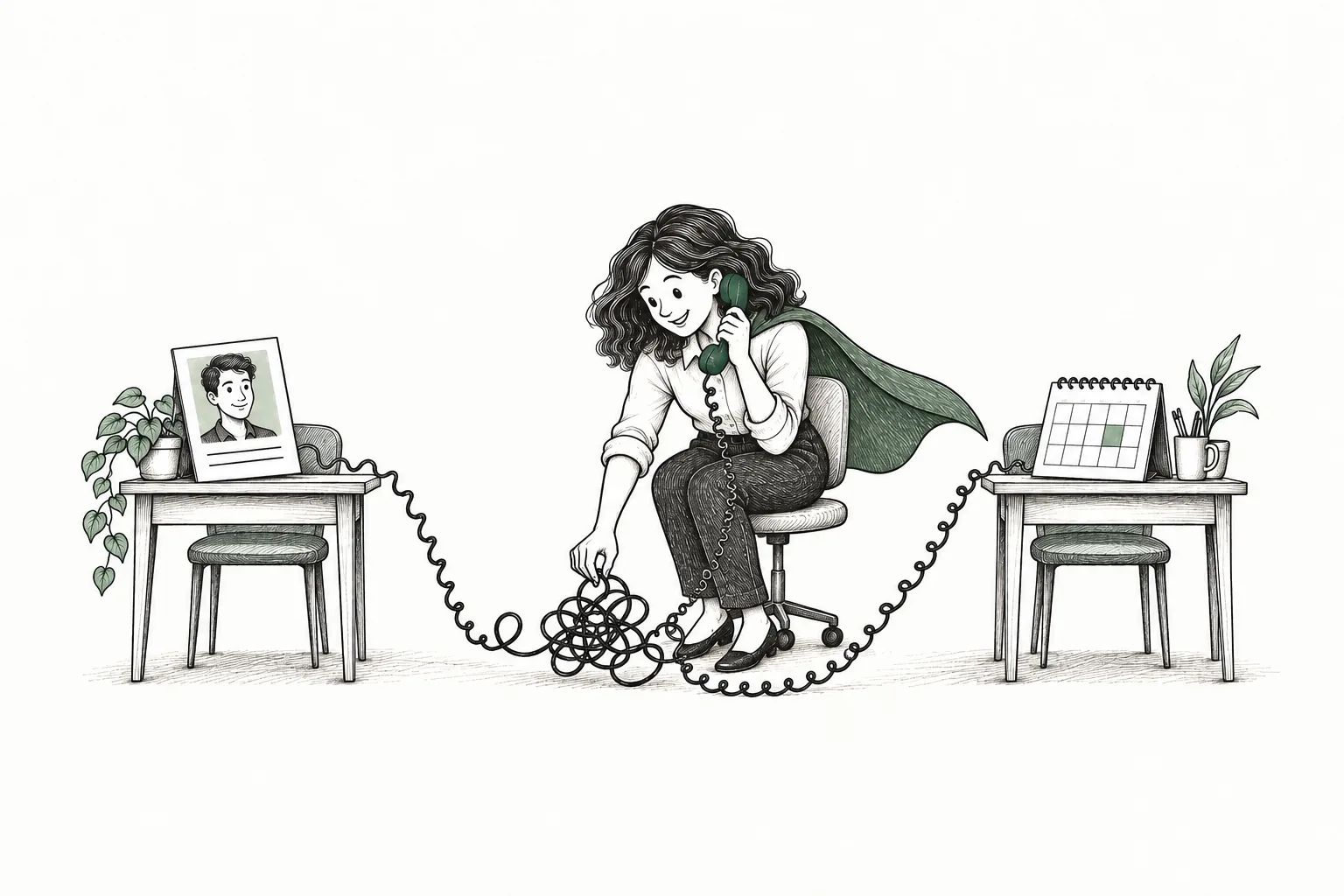
The client wants 'a few more options'. The candidates want an update. You're doing the chasing, but neither side is making a decision. Before sending another follow-up, work out what answer you need.
What does 'a few more options' actually mean?
Suppose the client has seen three candidates who meet the agreed brief and asks for more. You can run another search. First, ask what was missing from the three they've already seen.
Was the experience too narrow? Was the salary wrong? Did someone else in the business change the requirement? Or has nobody made time to read the CVs properly?
Each answer sends you somewhere different. Without it, you can spend another afternoon producing a fourth version of a shortlist the client hasn't decided how to judge.
A useful follow-up might be: 'Before I widen the search, which part of these profiles is furthest from what you need?' That gives the client something more specific to respond to than 'Any thoughts?'
'Chased' isn't much of a handover
A colleague opens the job while you're away. The last note says 'chased client'. They still don't know whether you asked for interview slots, salary approval or feedback on one particular candidate.
Write down the answer you're waiting for and the person who owes it. Add what you told the candidate. Your colleague should be able to pick up the phone without reconstructing the week from your sent folder.
For a solo recruiter, the colleague is often next Monday's version of you. A note that felt obvious on Thursday can be surprisingly unhelpful after a weekend and six new briefs.
You can give an update without having the client's answer
Waiting for feedback is uncomfortable because you've made a promise you can't completely fulfil on your own. It gets worse when you avoid the candidate until you have something positive to say.
Tell them what you're waiting for, what you've asked and when you'll be back in touch. If their interview was on Tuesday, don't let Friday pass because the hiring manager still hasn't replied.
Be careful with 'it all sounds positive'. If all you know is that a meeting hasn't happened, that's the update. Giving the candidate an optimistic interpretation makes it harder for them to judge their other options.
Ask whether anything has changed on their side too. They may have another interview or an offer deadline. That matters to the call you make to the client next.
Sometimes the next follow-up should be a different conversation
If you've chased the same unanswered question several times, look at why the answer isn't coming. A reminder can prompt someone who forgot. It can't approve a budget or settle an internal disagreement about the hire.
You may need to ask whether the role is still live, speak to another decision-maker or agree to pause the search. Those are awkward calls. They can also stop you spending the week reporting progress that hasn't happened.
Automation has a place once you know the job it is doing. A reminder before a promised update can help. Repeating 'just checking in' to both sides leaves the underlying problem exactly where it was.
Open one job you're chasing today. Finish this sentence before writing the email: 'The decision I need is…' If you can't finish it, that's the conversation to have first.